
 Call Now
 Programs
  About
About 

BBA Finance Subjects- Core Topics, Specialization, Advanced Concepts

A Bachelor of Business Administration (BBA) in Finance is a versatile and valuable degree that can pave the way to a successful career in the world of finance. Whether you’re a high school graduate exploring your higher education options or someone looking to switch careers, a BBA in Finance can offer you a solid foundation in financial knowledge and open doors to a wide range of opportunities. In this blog, we’ll delve into what a BBA in Finance entails, its benefits, and how it can set you on the path to financial excellence.
FAQ’s
General:
- What is a BBA Finance?
A BBA Finance is a Bachelor of Business Administration program with a focus on financial concepts, including investments, corporate finance, and financial markets.
- Is BBA Finance right for me?
BBA Finance suits individuals interested in finance, data analysis, and careers in banking, investment management, or financial analysis.
- What are the typical courses in a BBA Finance program?
Courses include core business subjects (marketing, accounting) and finance-specific topics like financial accounting, investment analysis, and risk management.
- What are the career options after a BBA Finance?
Graduates can pursue roles in banking, investment management, financial analysis, insurance, and more. Advanced degrees like an MBA open door to leadership positions.
Curriculum:
- What are the math prerequisites for a BBA Finance program?
Strong math skills are essential, with requirements often including algebra, trigonometry, and statistics.
- What software programs will I learn in a BBA Finance program?
You’ll typically learn software like Microsoft Excel, financial modeling tools (e.g., Bloomberg, Capital IQ), and data analysis languages (e.g., Python, R).
- What are the capstone projects or internships like in a BBA Finance program?
Capstone projects apply financial concepts to real-world scenarios, while internships provide practical experience in finance-related organizations.
Admissions:
- What are the typical entrance exam requirements for a BBA Finance program?
Entrance exams like SAT, ACT, or university-specific tests may be needed. Strong academic performance and personal essays are also considered.
- What are the scholarship opportunities available for BBA Finance programs?
Universities offer merit-based and need-based scholarships. Research options and external scholarships for financial support.
- What are the typical admission deadlines for BBA Finance programs?
Deadlines vary, but applications for fall and spring semesters are common. Applying early is advisable for timely consideration.
Career and Future:
- What are the average starting salaries for BBA Finance graduates?
Starting salaries vary by location, industry, and role. Research potential earnings based on your career path.
- What are the highest-paying jobs for BBA Finance graduates?
High-paying roles include investment banking, top-tier financial analyst positions, and hedge fund careers, but they may involve demanding workloads.
- What are the opportunities for further studies after a BBA Finance?
Pursuing an MBA or specialized master’s degree can enhance career prospects and lead to leadership roles.
- What skills do I need for a successful career in finance?
Essential skills include analytical thinking, problem-solving, communication, teamwork, attention to detail, and strong ethical values.
BBA Finance COURSE CURRICULUMN
Sem 1-
- Management & Leadership
- Organizational Behaviour
- Business Economics
- Business Communication
- Business Accounting
Sem 2-
- Financial Management
- Human Resource Management
- Operations & Material Management
- Essentials of Marketing Management
- Strategic Management
Sem 3-
- Research Methodologies for Managers
- Business Computing & IT Applications
- Business Analytics for Managers
- International Business
- Essentials of Entrepreneurship
Sem 4-
- Data Visualization
- Merger Acquisition & Corporate Restructuring
- Investment Banking
- Behavioural Finance
- Marketing of Financial Services
Sem 5-
- Quantitative Techniques
- Business Policy & Strategies
- International Financial Management
- Investment Analysis and Portfolio Management
- Capital Markets and Derivatives
Sem 6-
- Essentials of Logistics & Supply Chain Management
- Financial Risk Management
- Dissertation
Salary Range of BBA Finance Graduates:
- Beginner: ₹3-5 lakhs per annum
- Mid-level: ₹5-10 lakhs per annum
- Experienced: ₹10-20 lakhs per annum
- Senior-level: ₹20+ lakhs per annum
Factors Affecting Salary:
- Industry: Finance, IT, consulting, and e-commerce generally offer higher salaries.
- Company size and reputation: Larger and more established companies typically pay more.
- Location: Metropolitan cities like Delhi, Mumbai, and Bangalore have higher salary ranges.
- Skills and experience: Specialization in areas like investment banking, financial modeling, or risk management can command higher pay.
- Academic qualifications: An MBA or relevant certifications can enhance earning potential.
Additional Tips:
- Network with professionals in the field to gain insights and potential job opportunities.
- Continuously upskill yourself through courses, certifications, and industry knowledge.
- Consider specializing in a niche area to stand out from the competition.
- Negotiate your salary confidently based on your qualifications and experience.
STUDY MATERIAL
Textbooks:
- “Fundamentals of Financial Management” by Brigham and Ehrhardt: This classic textbook provides a comprehensive overview of financial management concepts, including financial analysis, forecasting, capital budgeting, and investment decisions.
- “Investments” by Bodie, Kane, and Marcus: This textbook covers the essential concepts of investment analysis and portfolio management, including asset allocation, risk management, and security valuation.
- “Financial Accounting” by Horngren, Datar, and Rajan: This textbook provides a foundation in accounting principles and financial reporting, which are essential for understanding financial statements and making sound financial decisions.
CHALLENGES
Graduating with a Bachelor of Business Administration (BBA) in Finance is an exciting step towards a rewarding career in the finance industry. However, it’s important to be aware of the challenges that await as you enter the workforce. In this article, we’ll explore some of the key challenges that BBA finance graduates may face and offer actionable insights on how to overcome them.
- Competition in the Finance Industry:
The finance sector is highly competitive, with numerous qualified candidates vying for entry-level positions. To stand out, leverage internships, engage in relevant projects, and emphasize your soft skills, such as communication and teamwork, in your job applications and interviews.
- Lack of Practical Experience:
Fresh graduates often lack practical experience, which employers value. Bridge this gap by seeking internships, volunteering, or working on personal finance projects to gain hands-on experience and build your resume.
- Addressing Technical Skills Gaps:
While your BBA provides a strong foundation, some employers may require specific technical skills, such as data analysis or financial modelling. Consider earning relevant certifications or enrolling in online courses to enhance your skill set and meet industry demands.
- Developing Soft Skills:
Soft skills like communication, problem-solving, and critical thinking are essential for success in finance. Seek opportunities to develop these skills through extracurricular activities, leadership roles, and communication workshops.
- Staying Current with Industry Changes:
The financial landscape evolves rapidly. To remain relevant, engage in continuous learning through professional development, industry publications, and online courses. Staying informed about industry trends and advancements is crucial.
- Finding Your Ideal Career Path:
Finance offers a wide range of career paths, and choosing the right one can be challenging. Research various roles, network with professionals in the field, and conduct informational interviews to identify the best fit for your interests and skills.
- Balancing Work and Life:
Finance can be demanding, potentially affecting work-life balance. To maintain a healthy equilibrium, set clear boundaries, practice self-care, and prioritize your personal well-being. Remember that long-term success requires a sustainable approach.
- Additional Challenges:
External factors like economic conditions and location can pose additional challenges. Be prepared for varying starting salaries, limited job openings, or potential relocation requirements.
To conclude, a Bachelor of Business Administration (BBA) in Finance equips students with a robust foundation in financial principles and practices, preparing them for diverse careers in the finance sector. By blending theoretical knowledge with practical skills, the program fosters analytical thinking, decision-making capabilities, and a deep understanding of financial markets. Graduates emerge as well-rounded professionals ready to tackle challenges in the dynamic world of finance, with opportunities ranging from investment banking to financial planning. The program not only opens doors to lucrative career paths but also instills a lifelong appreciation for the strategic role of finance in business success.
UPES Online Admission Enquiry
Recommended Courses




Latest Blogs
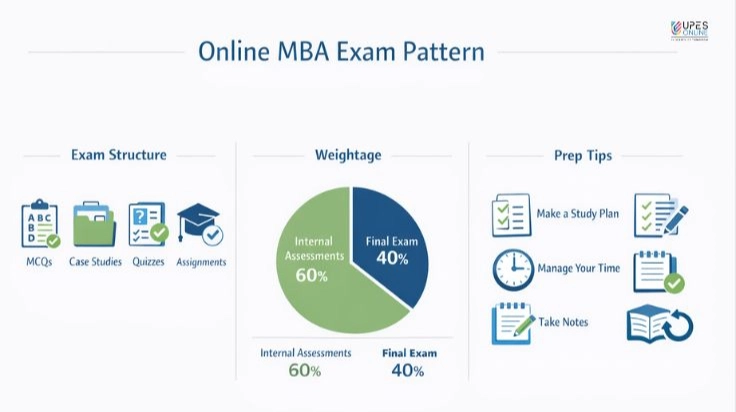
Online MBA Exam Patterns: What to Expect & How to Prepare
Know the online MBA exam pattern in India. Assessment weightage, proctored exams, security & practical preparation strategies for online learners.
Read MoreJan 20, 2026 I 7 mins
General MBA vs Specialized MBA: How to Choose Your Path in 2026?
General MBA vs specialized MBA compared on metrics like scope, ROI, salary & career growth in India. Understand the path & choose wisely.
Read MoreMay 3, 2026 I 8 mins
Product Analyst vs Data Analyst: Skills, Responsibilities, Salary
Compare product analyst with data analyst roles, skills, tools, responsibilities, salaries & career growth in India to choose the right data career.
Read MoreJun 1, 2026 I 8 mins
Cold Chain Logistics in India: How It Works, Key Players, and Career Opportunities
Learn how cold chain logistics works in India, its components, technologies, top companies, salary, career opportunities, and industry trends.
Read MoreJun 6, 2026 I 11 mins
HR Analytics: Types, Benefits, Tools, and Why It Matters
Learn what HR Analytics is, its types, benefits, tools, career opportunities, salary, skills, and why HR analytics is transforming modern workforce management.
Read MoreJun 11, 2026 I 11 mins
Carbon Credits in India: Pricing, Trading, Careers, and How to Participate
Learn what carbon credits are, how carbon trading works, current pricing, opportunities, market trends, & how to participate in India's emerging carbon market.
Read MoreJun 20, 2026 I 8 mins
Revenue Analytics: Key Aspects, Software, Examples, Responsibilities & Salaries
Learn what Revenue Analytics is, how software works, real-world examples, salaries, careers, & why revenue analytics is an in-demand business skills in 2026.
Read MoreJun 28, 2026 I 11 mins
Types of Online B.Com Courses & Best Specializations: Complete Guide
Explore online B.Com courses, top specializations, career opportunities, salaries, & learn how to choose the best online B.Com degree.
Read MoreJul 3, 2026 I 11 mins
Online Degree vs Offline Degree: Key Aspects to Consider Before Choosing
Compare online degree vs offline degree based on flexibility, costs, career opportunities, recognition, & learning experience to choose the right program.
Read MoreJul 10, 2026 I 9 mins
Lifecycle Marketing: Stages, Benefits, Strategies & Examples
Learn what lifecycle marketing is, its stages, strategies, benefits, real-world examples, lifecycle marketing vs growth marketing, & why it matters for modern marketers.
Read MoreJul 25, 2026 I 14 mins
Online B.Com Scope in 2026: Benefits, Careers, Salaries & Is It Worth It?
Explore online B.Com scope in 2026, including benefits, career options, salaries, industries, higher studies and whether an online B.Com degree is worth it.
Read MoreJul 31, 2026 I 11 mins
Related Articles

10 Best BBA Finance Job Roles for Students To Pursue After Degree
Explore 10 top BBA Finance jobs & their future outlook in India. Land your dream career with right skills & earn up to 10 Lakhs as a fresher.
Read Blog
BBA Salary in India: Average, Per Month, Job Specific
2025 BBA salary trends, average pay, career opportunities to upskill, & specialization-based earnings to plan your career growth.
Read Blog
BBA Finance Subjects- Core Topics, Specialization, Advanced Concepts
Dive into the world of finance! Our 2024 BBA Finance guide cracks open the syllabus, reveals core courses, & unveils pro tips to ace your degree.
Read Blog10 Best BBA Finance Job Roles for Students To Pursue After Degree
Explore 10 top BBA Finance jobs & their future outlook in India. Land your dream career with right skills & earn up to 10 Lakhs as a fresher.
Read BlogBBA Salary in India: Average, Per Month, Job Specific
2025 BBA salary trends, average pay, career opportunities to upskill, & specialization-based earnings to plan your career growth.
Read BlogBBA Finance Subjects- Core Topics, Specialization, Advanced Concepts
Dive into the world of finance! Our 2024 BBA Finance guide cracks open the syllabus, reveals core courses, & unveils pro tips to ace your degree.
Read Blog10 Best BBA Finance Job Roles for Students To Pursue After Degree
Explore 10 top BBA Finance jobs & their future outlook in India. Land your dream career with right skills & earn up to 10 Lakhs as a fresher.
Read Blog