DeepSeek Vs ChatGPT: Key Differences & Similarities in All Aspects
Table of Contents:
- DeepSeek vs ChatGPT: A Detailed Comparison
- DeepSeek vs ChatGPT vs Claude
- DeepSeek vs ChatGPT Pricing
- DeepSeek vs ChatGPT for Coding
- DeepSeek for Coding: Strengths and Weaknesses
- DeepSeek vs ChatGPT API Cost
- Conclusion
Not too long ago, technology felt simpler. We relied on search engines, typed in questions, and sifted through pages of results to find answers. Now there are so many intimidating words and concepts making the round around internet and technology: AI, Generative AI, Chatbots, so on and so forth! The game of technology, interaction, knowledge dissemination, and everything has now a complete make-over with the coming of artificial intelligence.
When ChatGPT arrived, it was a game-changer—an AI chatbot that could answer complex questions, hold conversations, and even create content with a human-like touch. All you had to do was type a prompt, and voilà! You had a well-structured response in seconds. It quickly became the go-to AI for users worldwide.
Needless to say, ChatGPT was the most popular contender in the market of artificial chatbots until now. We suppose all of us have heard the name of this new revolutionary AI Chatbot: DeepSeek!
While both ChatGPT and DeepSeek offer advanced natural language processing (NLP) capabilities, they differ significantly in functionality, performance, and pricing. In this blog, we’ll compare DeepSeek vs ChatGPT, including ChatGPT-4, Claude, and Gemini, across multiple parameters such as accuracy, pricing, coding capabilities, API cost, and image generation to help you determine which AI model suits your needs best.
DeepSeek vs ChatGPT: A Detailed Comparison
Did you know that ChatGPT is the fastest-growing consumer software application in history, gaining over 100 million users in just two months? However, ever since the launch of DeepSeek, the whole world is trying to figure out if it is better than ChatGPT. Let us delve into DeepSeek vs ChatGPT, their features and their differences.
| Feature | DeepSeek | ChatGPT (GPT-4) |
|---|---|---|
| Model Architecture | Transformer-based | GPT-4 (Transformer-based) |
| Language Support | Primarily English and Chinese | Multi-language support |
| Response Accuracy | Good but still evolving | More refined and accurate |
| Creativity | Decent but lacks fine-tuning | Stronger contextual understanding |
| Coding Capabilities | Supports multiple programming languages | More optimized for complex coding tasks |
| API Availability | Available | Available with better documentation |
| Pricing | Competitive | Varies based on the plan |
| Image Generation | Not available | Available via DALL·E integration |
| Open Source? | Yes (DeepSeek-R1) | No |
Based on the differences stated above, any person will find that OpenAI’s model holds an edge in response quality, language versatility, and contextual understanding. DeepSeek, however, is more cost-effectiveness and supports open-source development through its DeepSeek-R1 model.
DeepSeek vs ChatGPT vs Claude
Claude, developed by Anthropic, is another competitor in the AI space. Here’s how they compare:
| Feature | DeepSeek | ChatGPT-4 | Claude (Anthropic) |
|---|---|---|---|
| Creativity | Moderate | High | High |
| Factual Accuracy | Decent | Strong | Stronger than DeepSeek |
| Ethical Safeguards | Standard | Strict | Strongest |
| Coding | Moderate | Advanced | Moderate |
Depending on the factor you are prioritising, you can choose to use that open AI. Those preferring the best when it comes to safety and ethics, can click open Claude for usage. If you are looking for optimum creative and technical responses, ChatGPT can come to your rescue. DeepSeek, on the other hand, is ideal for cost-conscious users looking for an open-source alternative.
DeepSeek vs ChatGPT Pricing
| Model | Free Version | Paid Plan |
|---|---|---|
| DeepSeek | Limited access | More affordable than ChatGPT |
| ChatGPT (GPT-4) | Free (GPT-3.5 only) | $20/month (ChatGPT Plus) |
While DeepSeek is a good affordable option since its free version does a good job and is quite cost-effective, those looking for premium features in ChatGPT will have to go for its paid version.
DeepSeek vs ChatGPT for Coding
When comparing DeepSeek and ChatGPT for coding tasks, the choice depends on the specific requirements, such as the programming languages supported, the complexity of the tasks, and the level of customization needed. Below is a detailed comparison table and analysis to help you decide which AI model might be better suited for coding-related tasks.
| Feature/Aspect | DeepSeek | ChatGPT |
|---|---|---|
| Primary Focus | Potentially specialized for coding tasks | General-purpose, including coding |
| Programming Languages | Likely supports popular languages (e.g., Python, JavaScript, Java) | Supports a wide range of languages (Python, JavaScript, C++, etc.) |
| Code Generation | May excel in specific domains, potentially optimized for efficiency | Strong general code generation, handles complex logic and algorithms |
| Code Debugging | May offer domain-specific debugging, potentially faster for niche tasks | Provides general debugging assistance, suggests errors and fixes |
| Code Optimization | May offer tailored optimizations | Provides general optimization tips |
| Learning Curve | May require familiarity with its specific interface | Easy to use, widely documented |
| Integration with Tools | Likely depends on implementation | Integrates with IDEs via plugins (e.g., VS Code) |
| Real-Time Data Access | Unlikely (unless integrated with APIs) | No (unless using GPT-4 with browsing) |
| Customizability | High (designed for specific use cases) | Moderate (via fine-tuning or plugins) |
| Error Handling | Potentially domain-specific | General error handling and explanations |
| Community Support | Limited (less widely known) | Extensive (large user base and community) |
| Cost | Likely varies (custom pricing) | Pay-per-use (API) or subscription (ChatGPT Plus) |
| Availability | Limited (specific industries or regions) | Widely available (API and web app) |
DeepSeek for Coding: Strengths and Weaknesses
Strengths:
- Potentially optimized for specific coding tasks or industries (e.g., data science, web development).
- May offer faster and more efficient solutions for niche problems.
- Customizable for specific workflows or environments.
Weaknesses:
- Less widely known, so documentation and community support may be limited.
- May lack the versatility of ChatGPT for general-purpose coding tasks.
ChatGPT for Coding: Strengths and Weaknesses
Strengths:
- Excellent for general-purpose coding tasks, including code generation, debugging, and optimization.
- Supports a wide range of programming languages and frameworks.
- Provides detailed explanations for errors and suggestions for improvement.
- Integrates with popular tools like VS Code via plugins.
- Large community and extensive documentation.
Weaknesses:
- May not be as efficient or tailored for highly specialized tasks.
- Limited real-time data access (unless using GPT-4 with browsing).
DeepSeek is best for organizations or developers with specific coding needs (e.g., proprietary languages, niche industries). Those who prioritize efficiency and customization over versatility can also make good use of DeepSeek. For general-purpose coding, learning, and prototyping, ChatGPT works best. It is also ideal for developers who need support across multiple languages and frameworks. If you are a beginner at coding, you’ll love ChatGPT for its explanatory capabilities.
DeepSeek Vs ChatGPT API Cost
Compared to ChatGPT, DeepSeek's API is significantly cheaper, with DeepSeek charging considerably less per token, making it a more cost-effective option for developers and users who need large-scale text generation; while ChatGPT offers a free tier, accessing advanced features requires a paid subscription, usually starting at $20 per month, whereas DeepSeek can be used at a much lower cost per API call.
Conclusion
While both ChatGPT and DeepSeek are strong contenders, they come with their ow difference and similarities. Both are LLMs and products of artificial intelligence, created to make human lives, research, and knowledge consumption easier. In the battle of DeepSeek vs ChatGPT, more than deciding which one’s better, it is wiser to approach the question with which factor you are considering.
If you’re looking for an affordable AI model with open-source flexibility, DeepSeek is a solid choice. DeepSeek is best for organizations or developers with specific coding needs (e.g., proprietary languages, niche industries). Those who prioritize efficiency and customization over versatility can also make good use of DeepSeek. For general-purpose coding, learning, and prototyping, ChatGPT works best. For businesses and individuals needing high-quality, accurate, and reliable AI, ChatGPT-4 is the best investment.
Which AI model do you prefer? Let us know in the comments!
UPES Online Admission Enquiry
Recommended Courses

Artificial Intelligence and Machine Learning
MCA in Artificial Intelligence and Machine Learning
View Program

Latest Blogs
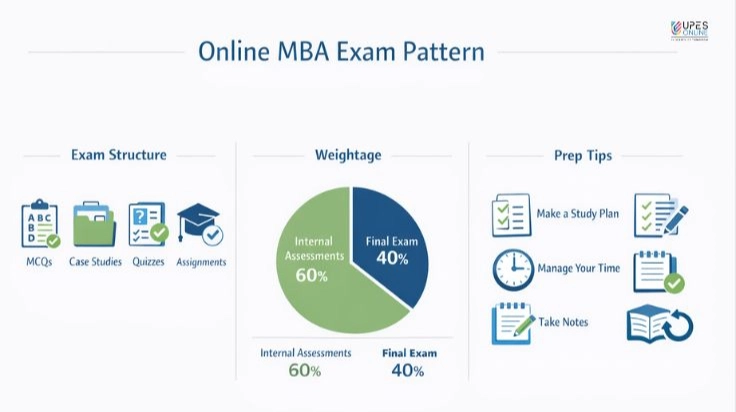
Online MBA Exam Patterns: What to Expect & How to Prepare
Know the online MBA exam pattern in India. Assessment weightage, proctored exams, security & practical preparation strategies for online learners.
Read MoreJan 20, 2026 I 7 mins
General MBA vs Specialized MBA: How to Choose Your Path in 2026?
General MBA vs specialized MBA compared on metrics like scope, ROI, salary & career growth in India. Understand the path & choose wisely.
Read MoreMay 3, 2026 I 8 mins
Product Analyst vs Data Analyst: Skills, Responsibilities, Salary
Compare product analyst with data analyst roles, skills, tools, responsibilities, salaries & career growth in India to choose the right data career.
Read MoreJun 1, 2026 I 8 mins
Cold Chain Logistics in India: How It Works, Key Players, and Career Opportunities
Learn how cold chain logistics works in India, its components, technologies, top companies, salary, career opportunities, and industry trends.
Read MoreJun 6, 2026 I 11 mins
HR Analytics: Types, Benefits, Tools, and Why It Matters
Learn what HR Analytics is, its types, benefits, tools, career opportunities, salary, skills, and why HR analytics is transforming modern workforce management.
Read MoreJun 11, 2026 I 11 mins
Carbon Credits in India: Pricing, Trading, Careers, and How to Participate
Learn what carbon credits are, how carbon trading works, current pricing, opportunities, market trends, & how to participate in India's emerging carbon market.
Read MoreJun 20, 2026 I 8 mins
Revenue Analytics: Key Aspects, Software, Examples, Responsibilities & Salaries
Learn what Revenue Analytics is, how software works, real-world examples, salaries, careers, & why revenue analytics is an in-demand business skills in 2026.
Read MoreJun 28, 2026 I 11 mins
Related Articles

Generative AI: Unveiling the Magic of Machine Creation
What is generative AI & how to use it? What tools to work on, applications, examples & use cases in everyday life.
Read Blog
Deep Learning Interview Questions- Basic & Advanced
Ace your Deep Learning interview questions with basic concepts, coding and advanced questions, resources and online practice platforms.
Read Blog
Prompt Engineering Basics, Uses, Examples & Applications
Level up your AI game! Your guide to prompt engineering & creative AI outputs. Real life applications + + tips to get started.
Read BlogGenerative AI: Unveiling the Magic of Machine Creation
What is generative AI & how to use it? What tools to work on, applications, examples & use cases in everyday life.
Read BlogDeep Learning Interview Questions- Basic & Advanced
Ace your Deep Learning interview questions with basic concepts, coding and advanced questions, resources and online practice platforms.
Read BlogPrompt Engineering Basics, Uses, Examples & Applications
Level up your AI game! Your guide to prompt engineering & creative AI outputs. Real life applications + + tips to get started.
Read BlogGenerative AI: Unveiling the Magic of Machine Creation
What is generative AI & how to use it? What tools to work on, applications, examples & use cases in everyday life.
Read Blogprev
next