
 Call Now
 Programs
  About
About 

Analysing Consumer Behaviour Through Big Data to Enhance Retail Marketing Strategies

Consumer behaviour has always been at the heart of marketing strategy. Traditionally, retailers relied on surveys, focus groups, and purchase histories to make inferences about consumer needs. While useful, these approaches were limited in scope, often producing fragmented insights and delayed feedback. In contrast, the contemporary retail environment generates vast, continuous streams of digital signals—from e-commerce clicks and loyalty card usage to social media mentions and geolocation data.
This transformation has created an unprecedented opportunity: big data analysis of consumer behavior. By systematically integrating these signals, retailers can move beyond intuition and reactive campaigns to data-driven strategies that predict, personalize, and influence purchasing decisions in real time.
Conceptual Foundations of Big Data in Consumer Behaviour
Academic literature frames big data as encompassing the “5 Vs”: volume, velocity, variety, veracity, and value. In retail contexts, each of these dimensions plays a role in shaping consumer insights:
- Volume: Billions of daily transactions, searches, and interactions offer a scale of data never previously accessible.
- Velocity: Retail data is generated in real time (e.g., cart abandonment, mobile notifications) requiring rapid response mechanisms.
- Variety: Structured (POS transactions) and unstructured (tweets, product reviews) data offer complementary perspectives.
- Veracity: Noise, inconsistencies, and biases must be accounted for through rigorous data cleaning and governance.
- Value: Insights must ultimately translate into measurable business outcomes, such as increased revenue or improved customer satisfaction.
Thus, big data analysis of consumer behavior is not simply about collecting more information but about building a framework to interpret and act upon it strategically.
From Data to Insight: Methodological Approaches
Retailers employ multiple analytical methods to derive actionable insights from consumer data. These include:
- Descriptive Analytics – Summarizing historical sales, identifying best-selling SKUs, or tracking monthly cohort retention.
- Predictive Analytics – Forecasting consumer demand using time-series models or predicting churn likelihood through logistic regression.
- Prescriptive Analytics – Suggesting optimal marketing actions, such as personalized discounting or store-level product placement, using optimization algorithms.
- Causal Analysis – Distinguishing correlation from causation, e.g., whether a promotion actually increased incremental sales or merely shifted demand.
Each stage requires robust infrastructure—data warehouses, pipelines, and analytical models—supported by cross-functional collaboration between marketing, IT, and data science teams.
Applications of Big Data Analysis of Consumer Behavior in Retail
Let us get into the details of the application of big data analysis of consumer behaviour in retail. Have a look below:
- Personalization and Recommendation Engines
Retailers like Amazon and Netflix have set the gold standard for recommendation systems. By leveraging collaborative filtering, content-based filtering, and increasingly deep learning approaches, retailers can offer customers highly personalized product suggestions. This not only enhances user experience but also increases average order value (AOV).
- Dynamic Pricing and Promotion Optimization
Big data allows retailers to model price elasticity of demand across different customer segments. Instead of blanket discounts, retailers can deploy personalized promotions, protecting margins while maintaining conversion rates. Academic studies demonstrate that personalized price targeting can increase revenue by 5–15% compared to uniform strategies.
- Market Basket and Cross-Selling Analysis
Through association rule mining (e.g., Apriori algorithm), retailers identify products that are frequently purchased together. Such analysis underpins cross-merchandising strategies (e.g., placing chips next to soft drinks), improving both convenience and sales.
- Sentiment Analysis of Reviews and Social Media
By applying natural language processing (NLP) techniques to customer reviews, ratings, and tweets, retailers can detect emerging preferences or dissatisfaction trends. This helps in product development and brand reputation management.
- Omnichannel Behavioural Insights
Big data enables retailers to integrate online and offline journeys. For example, identifying that a consumer researches online but prefers to purchase in-store can inform targeted digital campaigns that direct traffic to local outlets.
Academic Perspectives: Consumer Behaviour Theories and Big Data
Theories of consumer behaviour, such as Engel-Kollat-Blackwell (EKB) model or Maslow’s hierarchy of needs, emphasize motivation, decision-making, and post-purchase evaluation. Big data analysis of consumer behavior provides empirical depth to these theories by capturing actual choices and feedback at scale rather than relying on self-reported intentions. For instance:
- EKB Decision Process (Problem recognition → Information search → Evaluation → Purchase → Post-purchase): Clickstream and search query data reveal how consumers gather and evaluate information.
- Maslow’s Needs Hierarchy: Social media and review data highlight aspirational or emotional drivers of purchase beyond utility.
- Behavioural Economics: A/B testing of promotions validates theories about biases such as loss aversion or anchoring in real-world retail contexts.
Thus, big data not only advances retail practice but also enriches academic understanding of consumer behaviour.
Ethical and Governance Dimensions
The use of consumer data raises critical ethical and legal considerations. Customers increasingly demand transparency about how their data is collected and used. Regulations such as GDPR in Europe and DPDPA in India (2023) require organizations to secure explicit consent, allow data portability, and ensure privacy by design.
Retailers must embed data governance frameworks, which include:
- Data minimization: Collecting only what is necessary.
- Access control: Limiting who can view or manipulate consumer records.
- Anonymization: Removing personally identifiable information where possible.
- Fairness audits: Ensuring recommendation algorithms do not unintentionally discriminate.
Failure to balance analytics with ethics risks reputational damage, regulatory fines, and erosion of consumer trust.
Case Examples in Retail
- Starbucks: Uses loyalty card and mobile app data to personalize offers, timing promotions around individual preferences.
- Walmart: Employs predictive analytics for supply chain forecasting, ensuring shelves are stocked with items consumers are most likely to purchase.
- Zara: Integrates point-of-sale data with social media trends to design and release new fashion lines rapidly.
Each case illustrates how big data analysis of consumer behavior directly influences marketing strategies, product design, and operational efficiency.
Metrics for Evaluating Impact
To ensure analytics translates into value, retailers must measure outcomes beyond vanity metrics. Key metrics include:
- Customer Lifetime Value (CLV): Long-term profitability of consumer segments.
- Incremental Revenue Lift: Additional sales generated by targeted interventions.
- Churn Reduction Rate: Percentage decrease in customers lost due to predictive retention strategies.
- Return on Marketing Investment (ROMI): Efficiency of campaigns informed by analytics.
- Trust Indicators: Consent opt-in rates, preference adoption, and complaint frequencies.
FAQs
1. What is big data analysis of consumer behavior in retail?
It is the systematic collection and analysis of large-scale consumer signals (transactions, digital clicks, reviews, etc.) to understand and influence purchasing patterns.
2. How does it enhance marketing strategies?
It enables personalization, optimized pricing, effective promotions, and product innovation based on actual behaviour rather than assumptions.
3. Are advanced AI tools necessary?
Not always. Cohort analysis, regression models, and basic NLP already yield substantial value. Advanced AI amplifies, but does not replace, fundamentals.
4. What are the main challenges?
Data silos, poor data quality, privacy concerns, and difficulties in translating insights into operational actions.
Conclusion: Towards Evidence-Based Retail Strategy
Big data analysis of consumer behavior represents a paradigm shift in retail marketing strategy. It empowers retailers to align offerings with consumer needs in near real time, ensuring both operational efficiency and customer satisfaction. However, its power must be exercised responsibly, with strong governance frameworks that respect privacy and ethical principles.
For students and professionals eager to master these practices, the UPES Online Post-Graduate Certificate in Data Analytics (Hybrid) offers structured learning, hands-on projects, and exposure to cutting-edge tools. By bridging theory and practice, learners can contribute to the next generation of consumer-centric, data-driven retail strategies.
UPES Online Admission Enquiry
Recommended Courses


Latest Blogs
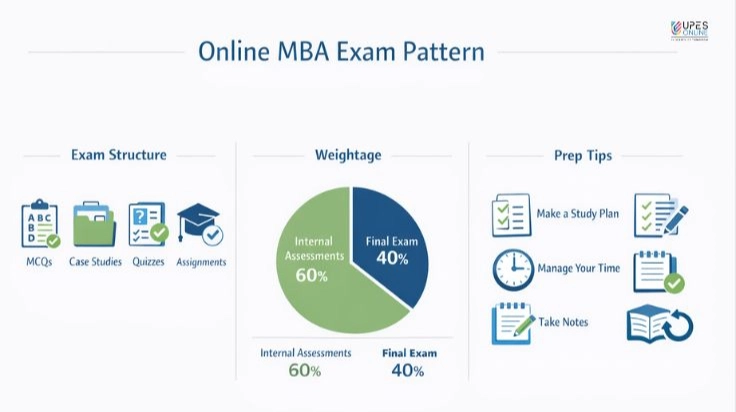
Online MBA Exam Patterns: What to Expect & How to Prepare
Know the online MBA exam pattern in India. Assessment weightage, proctored exams, security & practical preparation strategies for online learners.
Read MoreJan 20, 2026 I 7 mins
General MBA vs Specialized MBA: How to Choose Your Path in 2026?
General MBA vs specialized MBA compared on metrics like scope, ROI, salary & career growth in India. Understand the path & choose wisely.
Read MoreMay 3, 2026 I 8 mins
Product Analyst vs Data Analyst: Skills, Responsibilities, Salary
Compare product analyst with data analyst roles, skills, tools, responsibilities, salaries & career growth in India to choose the right data career.
Read MoreJun 1, 2026 I 8 mins
Cold Chain Logistics in India: How It Works, Key Players, and Career Opportunities
Learn how cold chain logistics works in India, its components, technologies, top companies, salary, career opportunities, and industry trends.
Read MoreJun 6, 2026 I 11 mins
HR Analytics: Types, Benefits, Tools, and Why It Matters
Learn what HR Analytics is, its types, benefits, tools, career opportunities, salary, skills, and why HR analytics is transforming modern workforce management.
Read MoreJun 11, 2026 I 11 mins
Carbon Credits in India: Pricing, Trading, Careers, and How to Participate
Learn what carbon credits are, how carbon trading works, current pricing, opportunities, market trends, & how to participate in India's emerging carbon market.
Read MoreJun 20, 2026 I 8 mins
Revenue Analytics: Key Aspects, Software, Examples, Responsibilities & Salaries
Learn what Revenue Analytics is, how software works, real-world examples, salaries, careers, & why revenue analytics is an in-demand business skills in 2026.
Read MoreJun 28, 2026 I 11 mins
Related Articles
Data Analytics: Turning Data Into Insights and Action
Discover latest data analytics techniques & tools to extract meaningful information from complex data sets & make data-driven decisions.
Read Blog
The Role of Data Analytics in the Renewable Energy Industry
Want to stay ahead of the game in the Renewable Energy Industry? Learn how Data Analytics is revolutionizing the industry in our latest blog.
Read Blog
Data Mining: Uncovering Hidden Patterns and Relationships in Data
Data mining in India has many hidden patterns which have application of these patterns of data mining in business processes.
Read BlogData Analytics: Turning Data Into Insights and Action
Discover latest data analytics techniques & tools to extract meaningful information from complex data sets & make data-driven decisions.
Read BlogThe Role of Data Analytics in the Renewable Energy Industry
Want to stay ahead of the game in the Renewable Energy Industry? Learn how Data Analytics is revolutionizing the industry in our latest blog.
Read BlogData Mining: Uncovering Hidden Patterns and Relationships in Data
Data mining in India has many hidden patterns which have application of these patterns of data mining in business processes.
Read BlogData Analytics: Turning Data Into Insights and Action
Discover latest data analytics techniques & tools to extract meaningful information from complex data sets & make data-driven decisions.
Read Blog